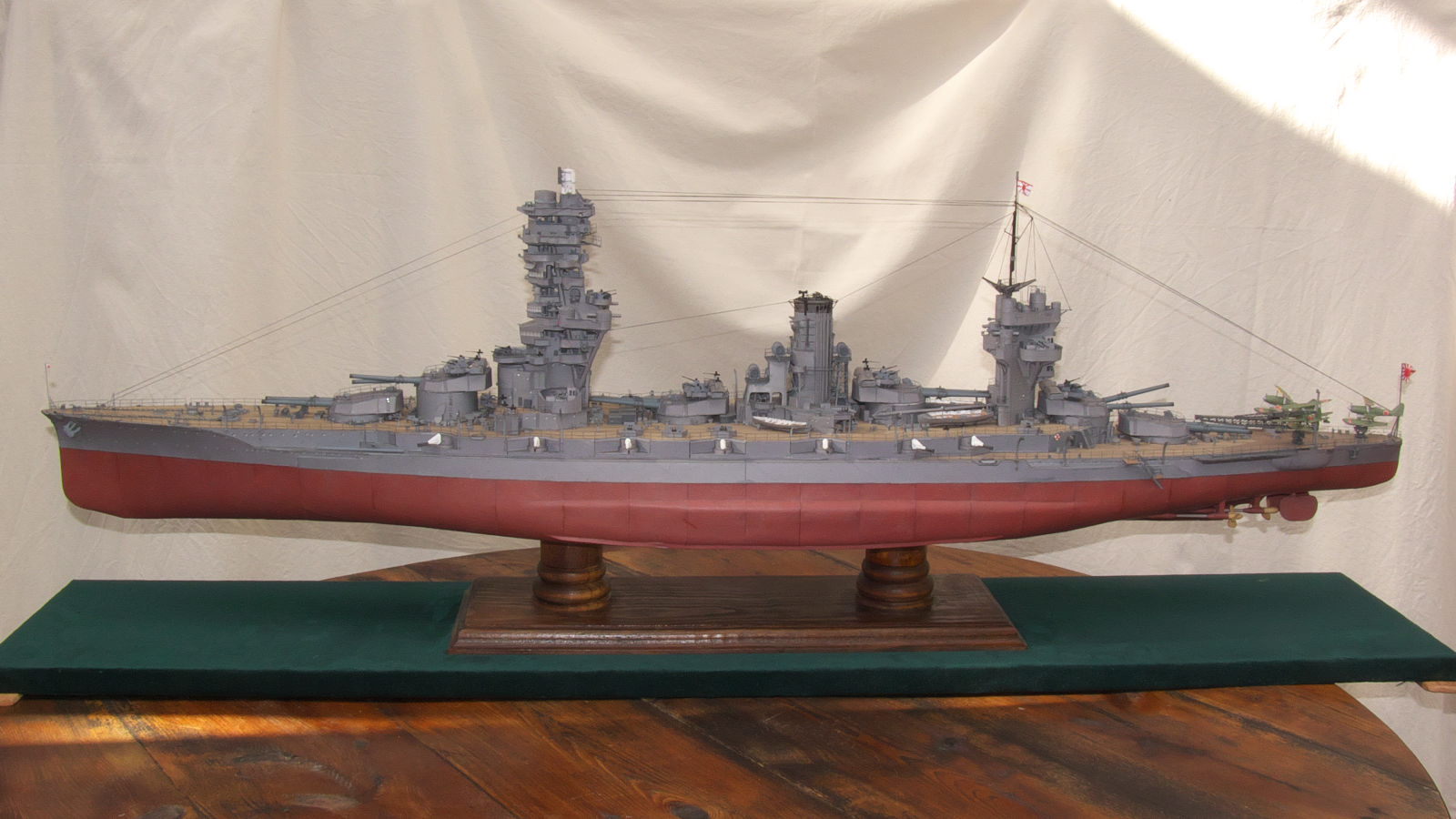
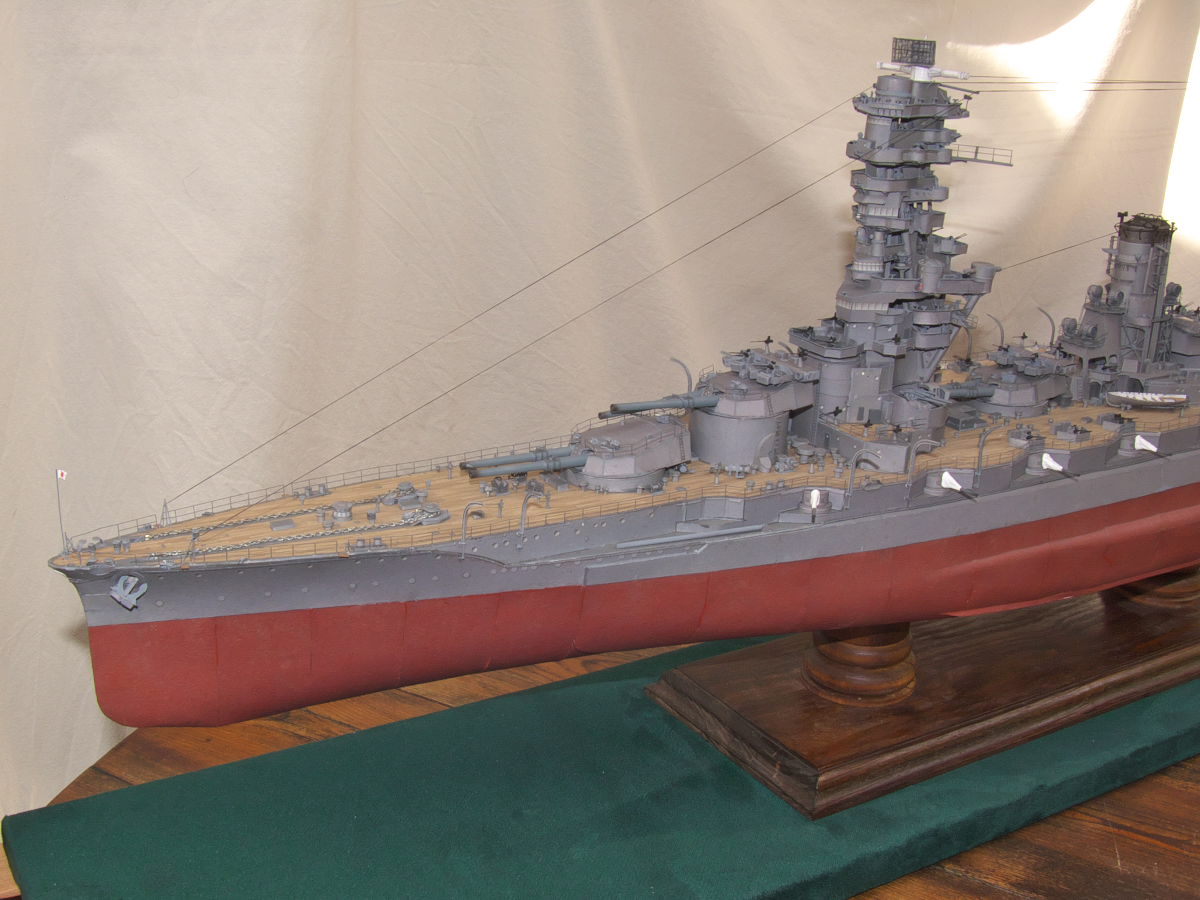
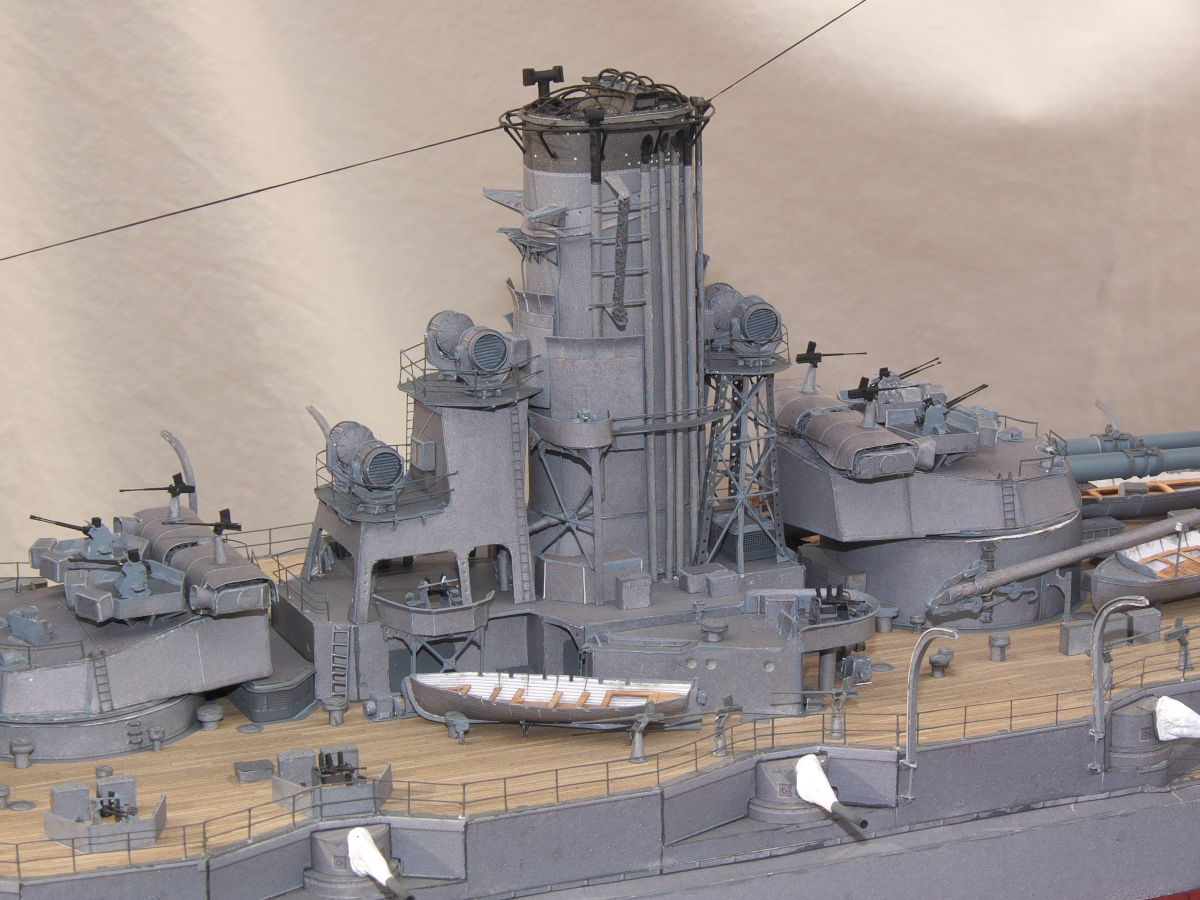
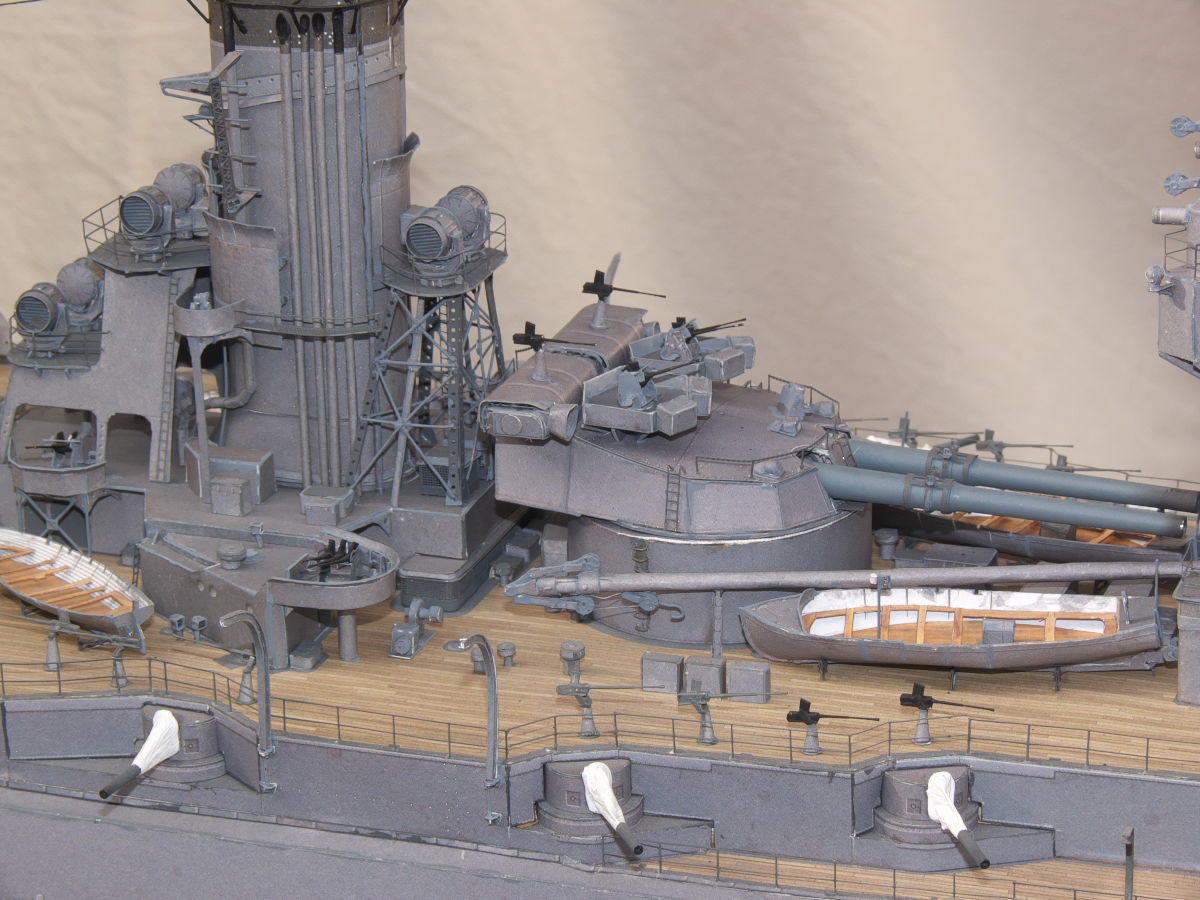
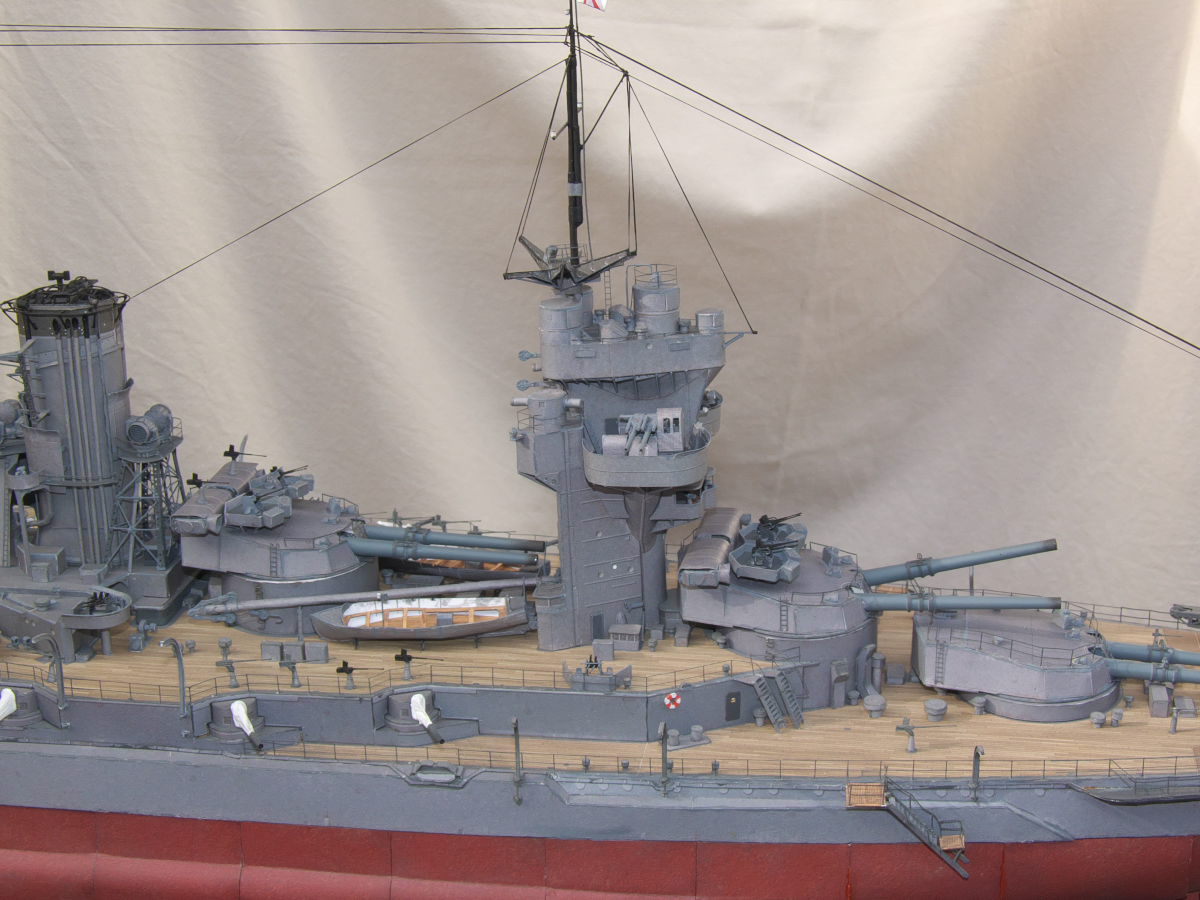
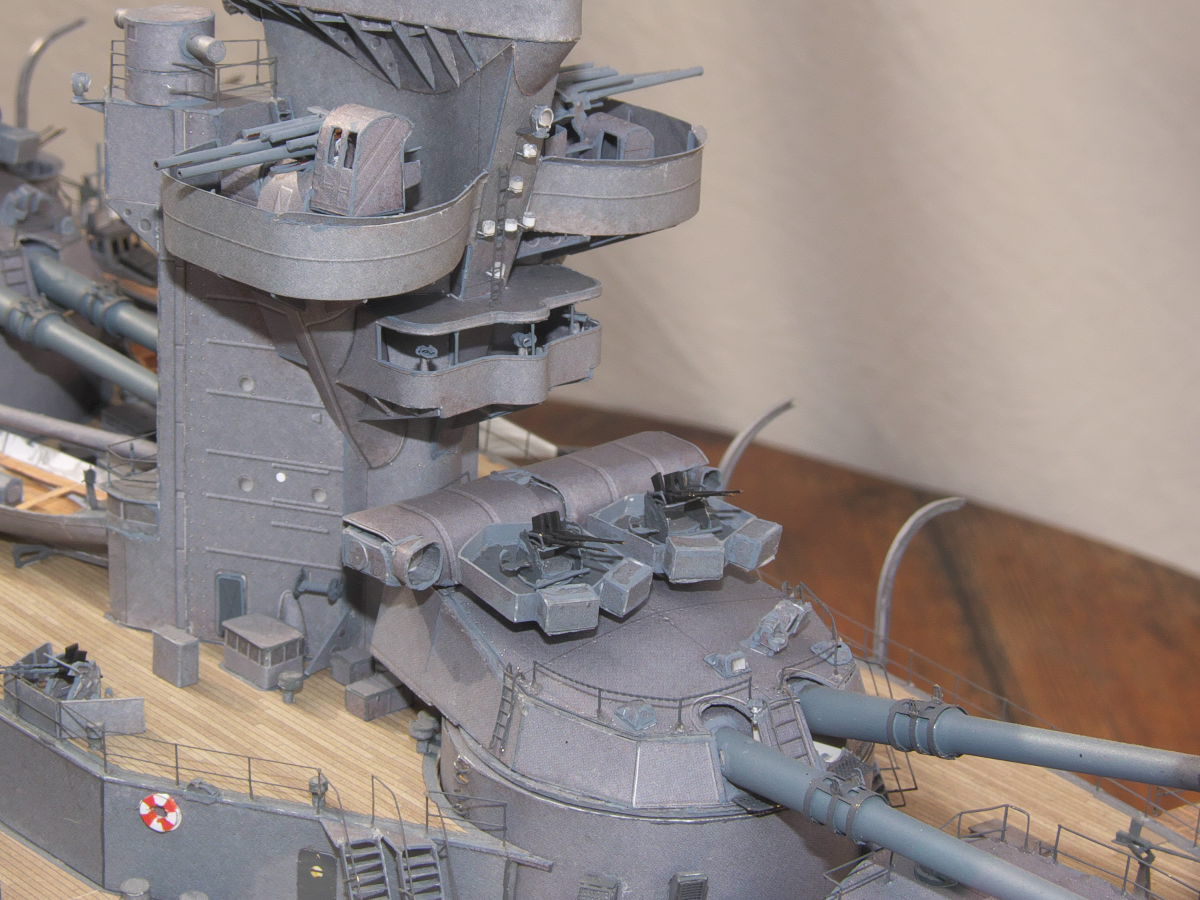
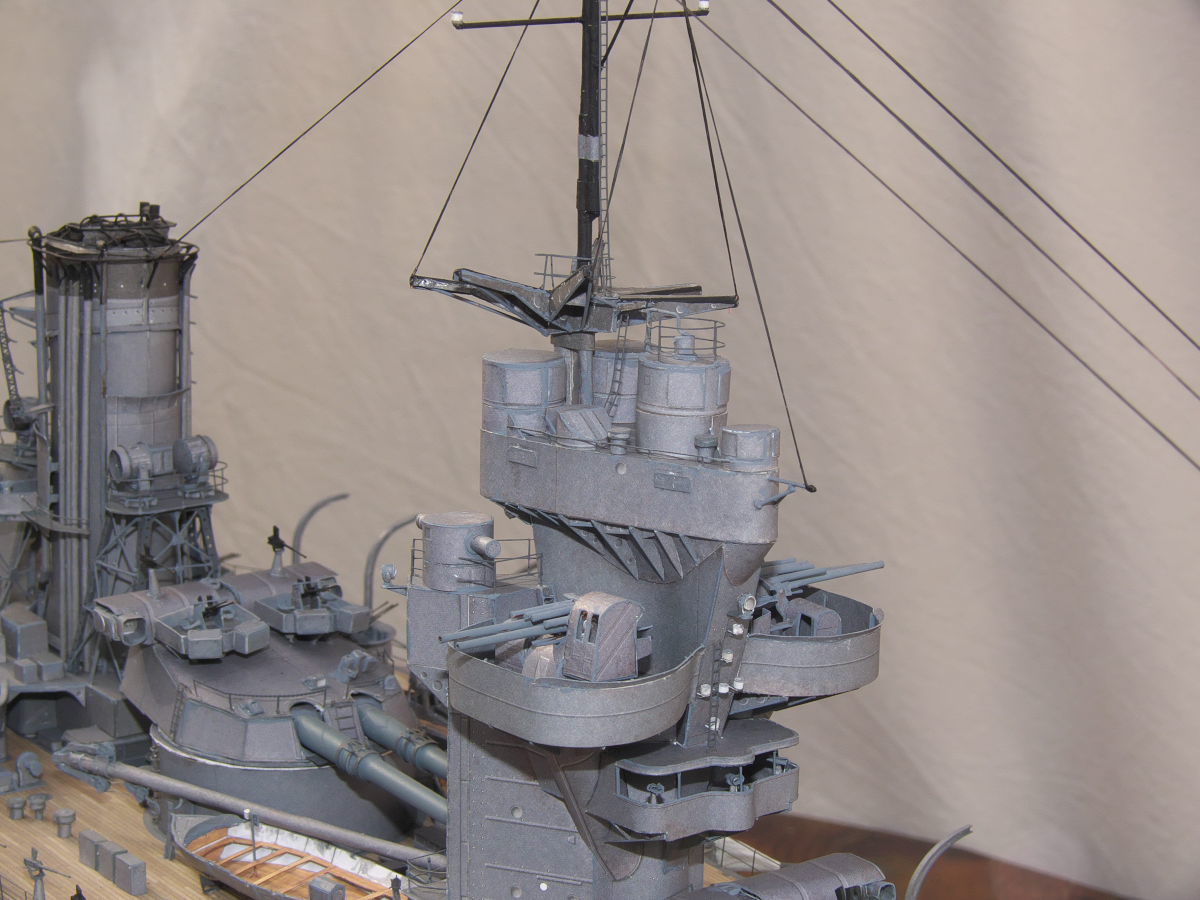
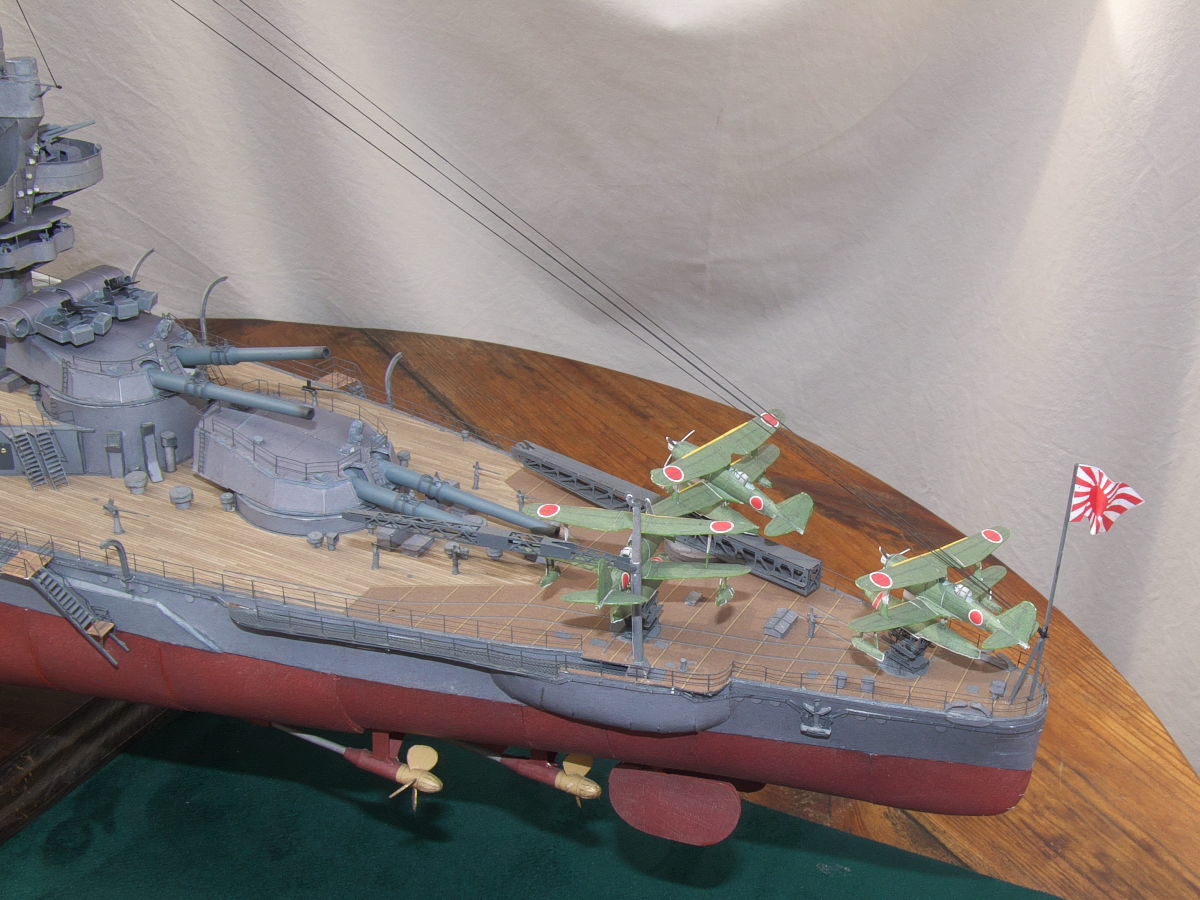
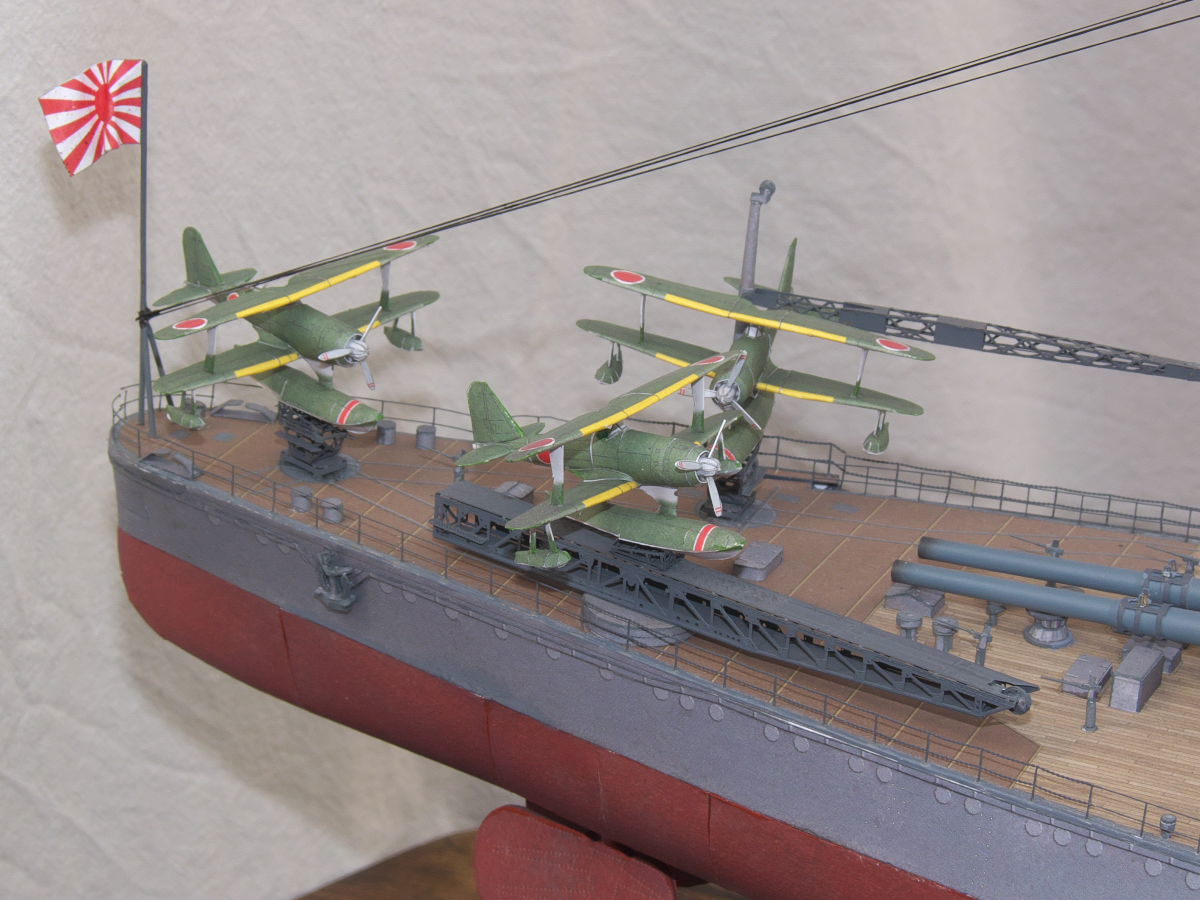
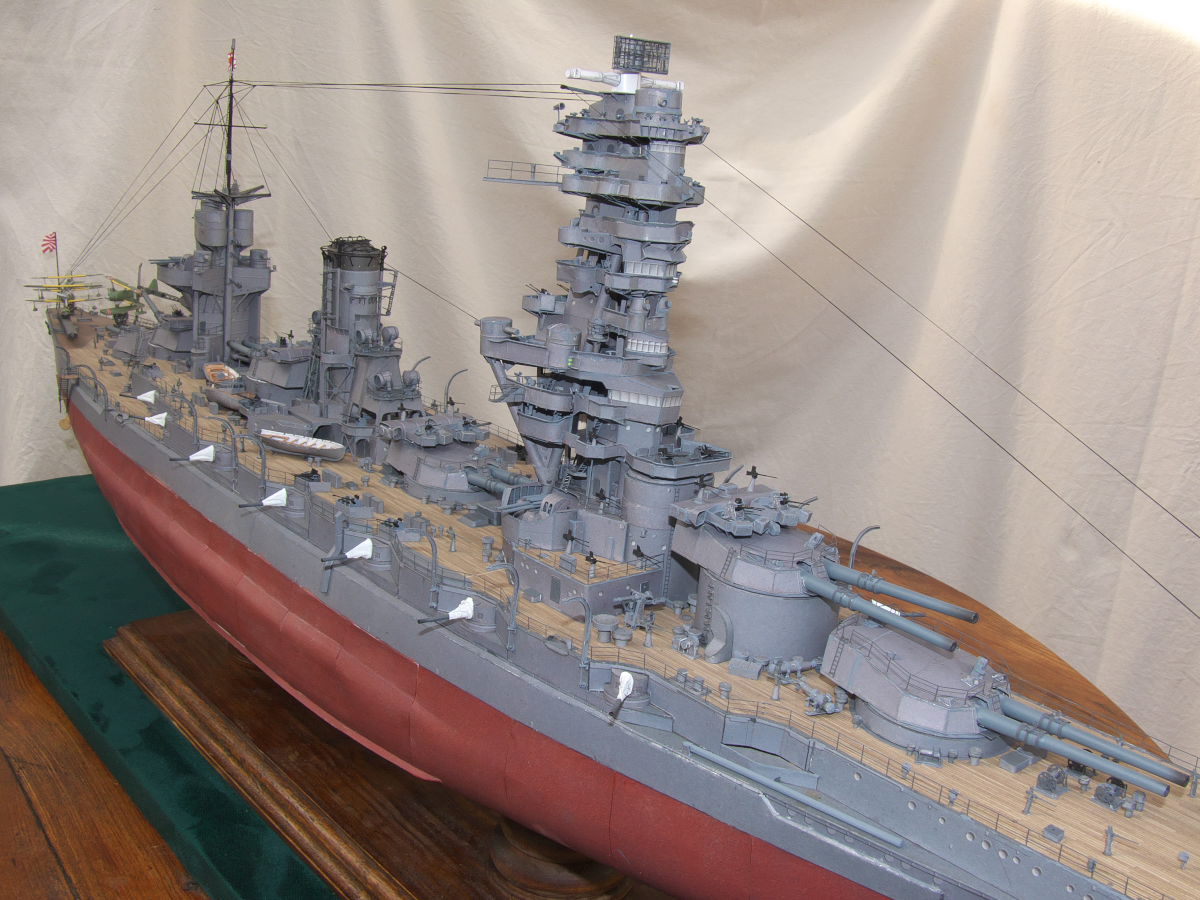
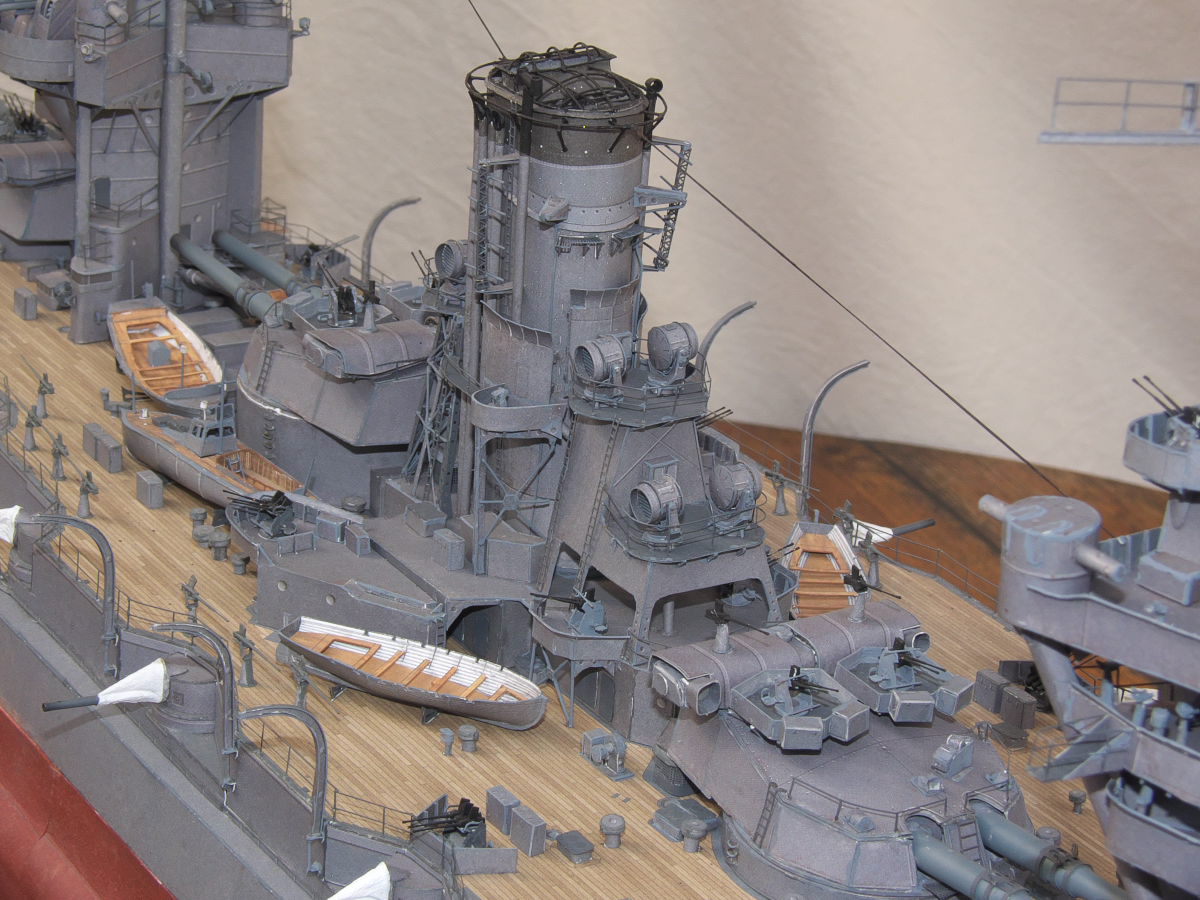
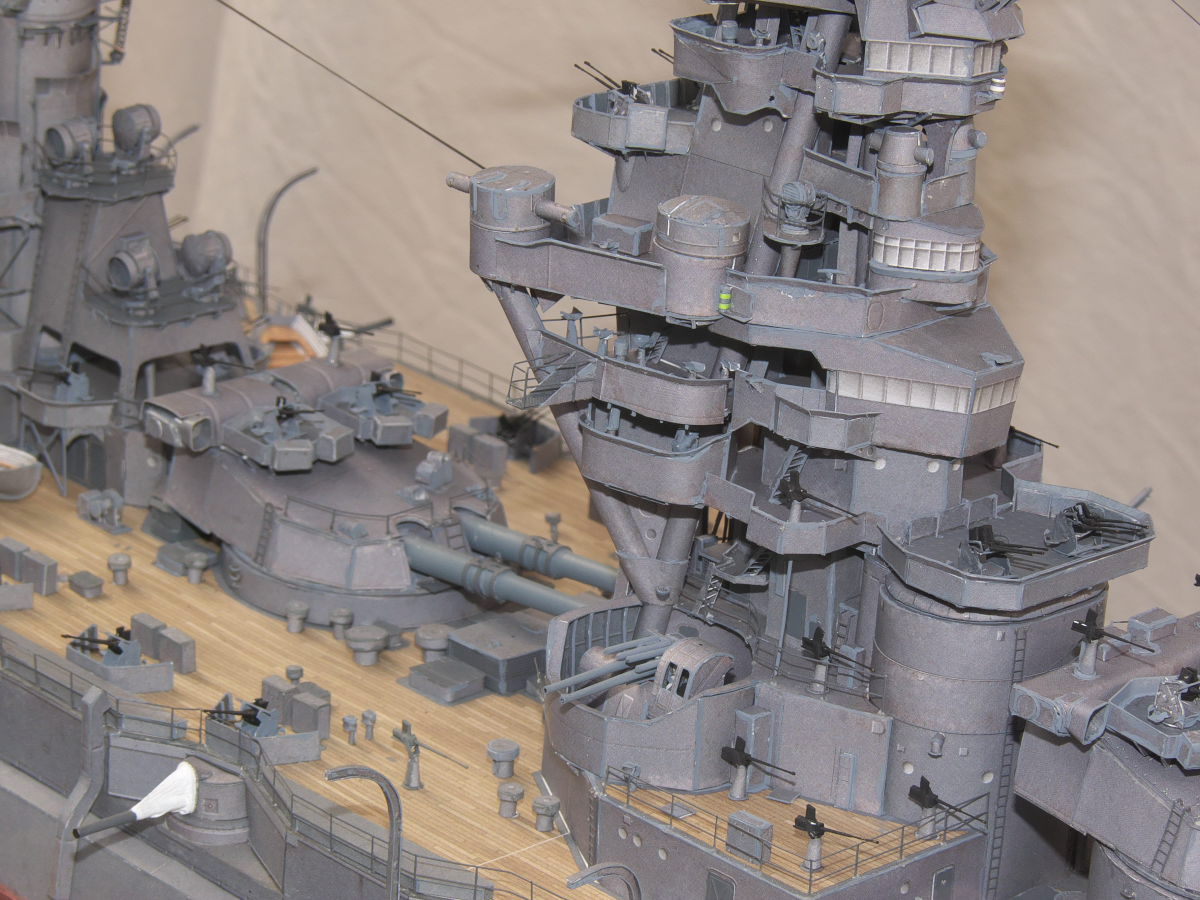
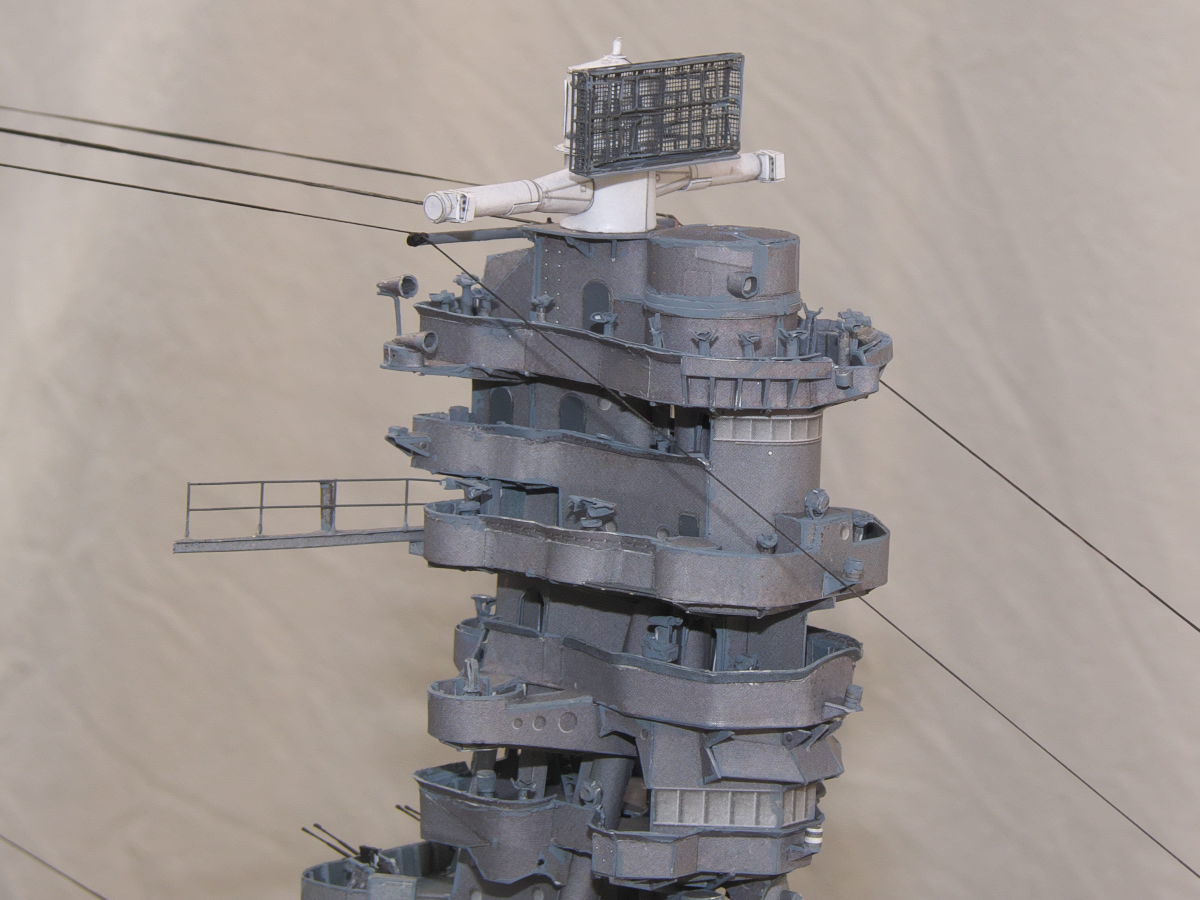
Japanese Battleship Fuso Card Model
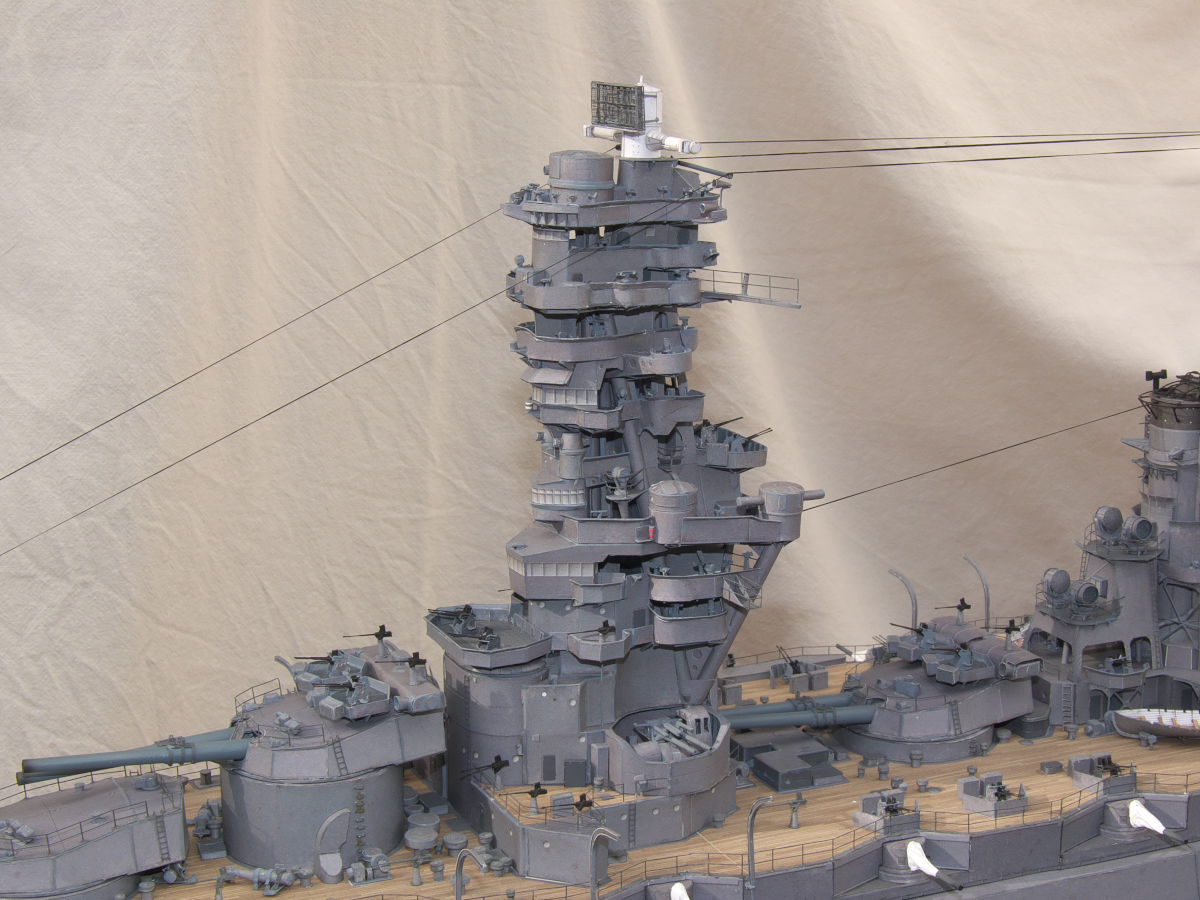
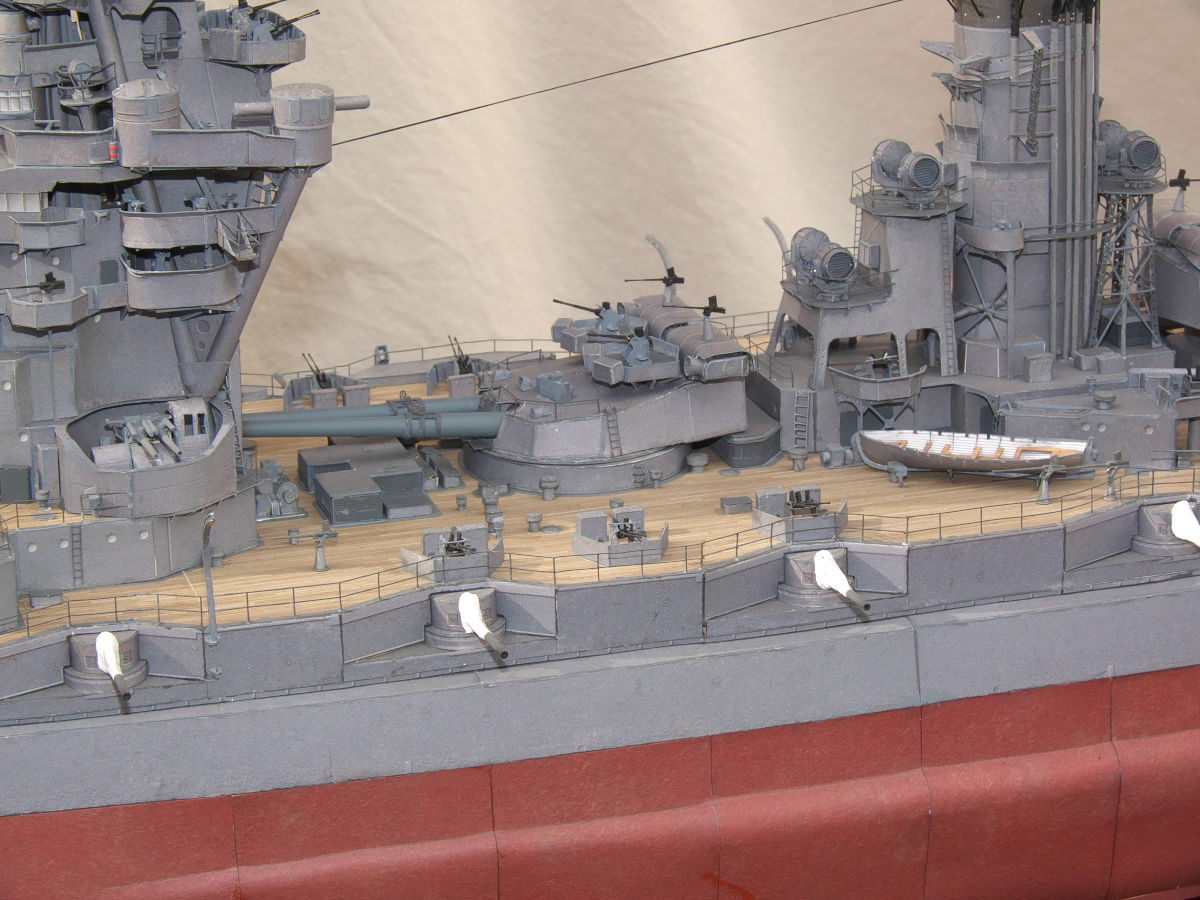
The model was built from a 1:200 scale card model kit published by Haliński. All accessories offered by the publishing house were used in the construction: laser-cut parts of the skeleton, metal barrels, railings and photo-etched parts.
The Japanese battleship Fuso began its service at the end of 1915, during the First World War. In the interwar period, Fuso was modernized twice. Among other things, her length was increased by over 7 meters, the propulsion was modernized, and the deck armor was increased. After the reconstruction, the command tower was 46 meters high (about the height of a 15-story skyscraper).
At the beginning of World War II, despite these modernizations, she was considered obsolete and played a rather auxiliary role in the Japanese Navy.
Fuso was sunk during the battle of October 25, 1944 in the Philippines, in the Surigao Strait.
Some technical data (1944):
- Displacement: 34,700 t (UK-34,152 tons),
- Length: 212.75 m (698 ft),
- Width: 33.1 m (108.6 ft),
- Draft: 9.7 m (31.8 ft),
- Speed: 24.5 kn (45.4 km/h, 28.2 mph).
Armor:
- Deck: 51-152 mm (2-6 in),
- Water line: 229-305 mm (9-12 in),
- Artillery turrets: 229-279 mm (9-11 in).
Armament:
- 6 twin 356 mm guns (14 in),
- 14 guns cal.152 mm (6 in),
- 4 twin 127 mm guns (5 in),
- 25 mm (0,98 in) anti-aircraft guns: 23 single, 6 twin, 8 triple,
- 6 torpedo tubes cal. 533 mm (20.98 in).
Sources:
- https://en.wikipedia.org/wiki/Japanese_battleship_Fus%C5%8D
1 Jun 2020
Modeler: Artur Stańczyk
Photographer: Ender
These photos are available under the Creative Commons Attribution-ShareAlike 4.0 International license. This means that you can use them for free for any purpose, even for commercial purposes, as long as you indicate the author of the photos and the link to the source, i.e. the website address from which they were taken. You must also provide the license name and a link to its terms and conditions.
